
Personal Statements and Qualifying Information
This position is a 3-year term, beginning January 2027 · There are 4 nominees for 2 positions
Scroll down to view statements from: Rachel Gottschalk | Jun Huh | Hye Young Kim | Erik Lubberts
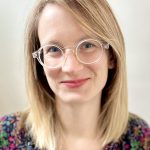
Rachel Gottschalk, PhD
Associate Professor
Department of Immunology
University of Pittsburgh
USA
Statement
I have training in cellular, molecular, and systems immunology, and my interdisciplinary background has given me an appreciation for the breadth of science the Cytokine Society represents, bridging investigators working across scales to understand complex cytokine-driven mechanisms that shape immune responses. I would bring my dedication to training and mentoring to this role, aiming to engage early career scientists and strengthen the Cytokine Society community. In addition to the Society’s ongoing efforts, I believe a top priority should be supporting trainees by promoting their research and expanding funding opportunities. Concretely, this could include amplifying student/postdoc member publications through social media and the Signals+ newsletter, curating and disseminating information on cytokine-relevant funding opportunities, and exploring fellowship or award programs to support trainees and early career scientists, potentially developed together with industry partners. Building these initiatives sustainably has potential to meaningfully advance members’ careers, making it a worthy investment.
Statement.
Participation in The Cytokine Society
I have attended and presented at the last two Cytokine Society conferences (2024 selected talk and 2025 invited speaker) and chaired a recent Cytokine Society-sponsored session at AAI 2026. I look forward to contributing more deeply to the Society’s growth and mission.
Other Professional Activities
I have expertise in event and conference planning and have previously served the American Association of Immunologists as a reviewer for their Intersect Fellowship. 2015 – Mid-Atlantic Chapter, Healthcare Businesswomen’s Association event organizer – Evolution of Success: Lessons from Women Leading Science (Panel Discussion; Yasmine Belkaid PhD, Claire Fraser PhD, Christina Rondinone PhD, and Redonda Miller, MD). 2019-2020 – Department of Immunology Retreat Committee (Member 2019 and Chair 2020) 2021,2022 – AAI Intersect Fellowship Review Committee 2026-present – Organizer, Cold Spring Harbor Systems Immunology
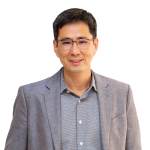
Jun Huh, PhD
Principal Investigator
Associate Professor of Immunology
Harvard Medical School
USA
Statement
I was born and raised in South Korea, where I completed my undergraduate and master’s degrees at Seoul National University and fulfilled my military service before coming to the United States for a Ph.D. in biology at Caltech, working on Drosophila genetics. It was only during my postdoctoral training with Dan Littman at NYU that I turned to immunology, and my laboratory at Harvard Medical School now works at the interface of cytokine biology, the gut microbiome, and the brain — from bile-acid control of Th17 and Treg differentiation to the roles of IL-17 and IL-17RB in neurodevelopment and behavior. This path, across countries, cultures, and disciplines, is exactly what I would bring to the Council. In my view, the ICIS’s top priority over the next three to five years should be to broaden and deepen its community: expanding participation from early-career scientists and from underrepresented regions and backgrounds, and building bridges between classical cytokine immunology and adjacent fields such as neuroscience, microbiology, and metabolism, where much of the field’s future growth will occur. The central challenge is doing this while preserving the scientific rigor and collegiality that define the Society – sustaining membership and meeting attendance amid tight research funding, and ensuring emerging investigators see a clear place for themselves within ICIS. I believe the Society can serve its membership better by creating more structured opportunities for people to meet and collaborate across disciplines and career stages: mentorship pairings, cross-field sessions, and travel or presentation support for trainees from less-resourced institutions. Having moved between a Drosophila genetics background and immunology, and between Korean and American scientific cultures, I understand firsthand what it takes to enter an unfamiliar field and community, and I would work to make those transitions easier for others.
Participation in The Cytokine Society
I was invited to be a speaker at Cytokines 2024 in Korea and I previously attended and participated in the ICIS annual meeting held in Hawaii.
Other Professional Activities
I have served on numerous institutional committees, including Harvard Medical School’s Institutional Animal Care and Use Committee (IACUC), faculty search committees for the Department of Immunology and for the immunology programs at Dana-Farber Cancer Institute, and the oversight committee for the MicRoN (microscopy) core. I am currently Faculty Co-Director of the Gnotobiotic Core Facility at Harvard Medical School and serve as a faculty advisor to the New England Bioscience Society. I also hold international leadership roles as Scientific Director of the HMS–SNUH–SNUCM collaborative research programs and as an International Principal Investigator at Keio University’s WPI-Bio2Q in Japan. Beginning in 2027, I will serve on the American Association of Immunologists (AAI) Annual Meeting Program Committee.
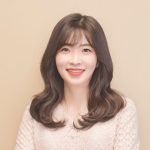
Hye Young Kim, PhD
Professor of Immunology
Department of Biomedical Sciences
Seoul National University College of Medicine
Korea
Statement
I would be honored to serve as a member of the ICIS Council. I am an immunologist at Seoul National University College of Medicine, with expertise in cytokine biology, innate lymphoid cells, type 2 immunity, and immune-mediated inflammatory diseases. My laboratory studies how cytokine networks regulate tissue immunity and inflammation, particularly in asthma, eosinophilic esophagitis, lupus nephritis, and allergic inflammation. Over the next three to five years, I believe The Cytokine Society should strengthen its role as an international platform connecting basic cytokine biology with translational and clinical immunology. Key priorities should include supporting emerging areas such as tissue-specific cytokine networks, immune-cell plasticity, tissue remodeling, systems immunology, and cytokine-targeted therapies. The Society should also expand opportunities for young investigators and increase engagement with members from diverse geographic regions. A major challenge will be maintaining a clear identity in cytokine biology while the field becomes increasingly interdisciplinary and therapeutically oriented. Another challenge is ensuring that early-career scientists and investigators outside traditional North American and European networks have meaningful opportunities for visibility and leadership. The Society could better serve its membership by creating more structured programs for mentoring, thematic networking, and international collaboration. My background as a biomedical scientist with training and research experience in both Korea and the United States, including medical school environments at Seoul National University and Harvard Medical School, has given me a broad perspective on bridging basic immunology, disease-oriented research, and global scientific communities. If elected, I would be pleased to contribute to strengthening the Society’s international reach, supporting early-career scientists, and promoting innovative cytokine research.
Participation in The Cytokine Society
I have participated in The Cytokine Society meetings over consecutive years. At Cytokines 2022, I was invited as a guest speaker in the KAI symposium. At Cytokines 2023, I delivered a presentation selected from submitted abstracts. At Cytokines 2024, I was invited as an official speaker. I have not yet served on a Cytokine Society committee, but these experiences have deepened my engagement with the Society and my appreciation for its role in advancing cytokine research internationally. I would be honored to contribute more actively through Council service.
Other Professional Activities
I currently serve as Vice Chair of the International Cooperation Committee of the Korean Association of Immunologists, where I contribute to strengthening global scientific exchange and promoting international engagement by the Korean immunology community. I also serve as Chair of the Mucosal Immunology Study Group under the Korean Association of Immunologists, supporting scientific interaction and community building around mucosal and barrier-tissue immunity. In addition, I have served for many years on scientific program committees, including those of the Korean Association of Immunologists and the Korean Society for Biochemistry and Molecular Biology. Through these roles, I have contributed to scientific program planning, symposium organization, speaker selection, and the development of sessions that bring together investigators from diverse areas of immunology and biomedical science. These experiences have given me practical leadership experience in international networking, scientific program development, and community building. I hope to bring these perspectives to The Cytokine Society and contribute to its continued growth as an inclusive and internationally engaged scientific community.
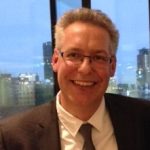
Erik Lubberts, PhD
Full Professor and head of the Research Laboratory of Experimental and Translation Rheumatology
Department of Rheumatology
Erasmus MC, University Medical Center, Rotterdam
The Netherlands
EULAR Center of Excellence in Rheumatology Research
Statement
Given my extensive background in immunology, rheumatology, and translational research, I am well-positioned to contribute effectively to serve as a member of the Council. My experience enables me to identify and evaluate strong candidates, while my professionalism, credibility, and dedication ensure that I would be a reliable and constructive voice within the Society. Following the transition to the name Cytokine Society, it is essential to continue to support and promote high-quality cytokine research by facilitating scientific meetings, publications, and active knowledge exchange. At the same time, recognize emerging talent, support early-career researchers, and create opportunities for the next generation to actively engage, while ensuring that existing members continue to experience clear value from their membership. Society should translate its growth and global position into tangible benefits for its members and lasting scientific impact. For example, by introducing small, industry-supported collaboration grants that stimulate multidisciplinary and international research cooperation, serving as a foundation for future internationally non-industry-funded projects. I envision a Society that offers more tailored support based on career stage, with expanded opportunities for members to present their work, build collaborations, and exchange knowledge beyond the annual meeting. Strengthening onboarding for new members and enhancing visibility, training, and travel opportunities for early-career researchers are also key priorities. For example, a “Cytokine Society Talent Program” could be established to provide travel grants and support research visits of 3 to 6 months to international laboratories. My interdisciplinary background allows me to approach scientific questions from multiple perspectives. It enables me to evaluate proposals and strategies comprehensively and to collaborate effectively with individuals across different scientific fields and career stages.
Participation in The Cytokine Society
Since 2000, I have participated in many different Cytokine meetings where I have presented our scientific data, including the one in Seoul, where I also chaired a session. Since 2014, I have also been a regular reviewer for the scientific journal Cytokine.
Other Professional Activities
I’m member of the editorial boards of Cytokine, Life, European Journal of Immunology and Frontiers in Immunology. I (have) participate(d) in scientific advisory boards as assessment committee member of the Dutch Scientific Organization (NWO) Open Competition ENW-M, assessment committee member of the Dutch Scientific Organization (NWO) Create2Solve 2023, scientific committee member of Group for Research and Assessment of Psoriasis and Psoriatic Arthritis (GRAPPA), scientific committee member for the Van Arman Award Competition of the Inflammation Research Association (IRA), USA, scientific board of advisors (WAR) of the Dutch Arthritis Association. In addition, I participated several times in the ACR abstract selection committee: Cytokines and Cell Trafficking’, USA and the (European) EULAR abstract selection committee: ‘Adaptive immunity in rheumatic diseases’. I participated for six years as scientific advisory board member of the Inflammation Research Association (IRA), USA.