
The Cytokine Society is delighted to announce that Peter J. Murray, Ph.D., Senior Group Leader at the Max Planck Institute of Biochemistry in Martinsried, Germany, and Honorary Professor in the Faculty of Medicine at the Technical University of Munich, is the recipient of the 2026 Cytokine Society–BioLegend William E. Paul Award for Excellence in Cytokine Research. This award honors a career that has fundamentally reshaped how the field understands the relationship between cytokines, immune cell function, and metabolism.
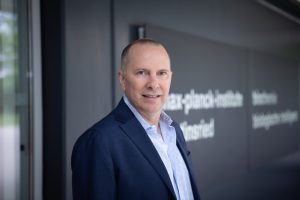
Dr. Murray will deliver the William E. Paul Award Presentation at the Opening Session of Cytokines 2026 on Sunday, October 18th, at the Scottish Event Campus in Glasgow.

The Cytokine Society thanks BioLegend for its generous support of this award.
From IL-10 and STAT3 to the Birth of Immunometabolism
Dr. Murray’s early work established the molecular basis of IL-10–mediated immune suppression, demonstrating that STAT3-dependent transcription is the central mechanism underlying IL-10’s anti-inflammatory activity. He went on to define broader principles governing cytokine signaling specificity and SOCS3 regulation — frameworks that remain central to the field today.
Recognizing that cytokine-regulated metabolic enzymes were fundamental regulators of immune cell fate rather than simple activation markers, Dr. Murray became a pioneer of what would become the field of immunometabolism. His landmark studies on amino acid metabolism in macrophages demonstrated that arginase-1 suppresses T cell–driven inflammation through arginine depletion — and his laboratory generated the first conditional arginase-1 knockout models to rigorously test this in vivo. These foundational discoveries opened new directions in chronic inflammation, fibrosis, host defense, and tumor immunology.
Ferroptosis, Tryptophan Metabolism, and Cancer
More recently, Dr. Murray’s group extended these concepts to aromatic amino acid metabolism. Their work demonstrated that metabolites generated by the cytokine-regulated oxidoreductases IL4i1 and IDO1 suppress ferroptosis — directly connecting immune metabolism to resistance to oxidative cell death. These findings revealed how tumors exploit immune-derived metabolites as functional oncometabolites to survive cellular stress, with important implications for understanding why IDO1 inhibitors have failed in clinical trials and for developing more effective combination strategies.
The macrophage polarization guidelines co-authored by Dr. Murray have been collectively cited more than 17,000 times, a lasting testament to his influence on the field’s rigor and reproducibility.
The William E. Paul Award and a Convergence of History
The William E. Paul Award carries particular historical resonance this year. William Paul’s laboratory first identified IL4i1 — then called Fig1 — as an IL-4–regulated gene in B cells in 1997. It was this very gene that became a central focus of the Murray laboratory decades later, uncovering a complexity and biological significance that could not have been anticipated at the time of its discovery. The award connecting these two scientific threads is a fitting tribute to both legacies.