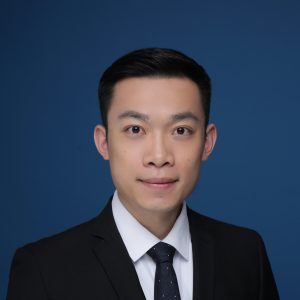
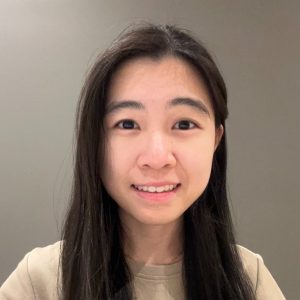
Kah Min Yap is a final year PhD candidate at the Peter MacCallum Cancer Centre in Melbourne, Australia, under the supervision of Prof. Paul Beavis, Prof. Phillip Darcy, and Dr. Im-ran House. Prior to her PhD, she completed an MSc in Drug Discovery and Development at University College London, UK, and a BSc in Pharmacology at The University of Melbourne, Australia.
Her PhD research focuses on engineering next-generation armoured CAR T cells with im-proved efficacy and safety using CRISPR/Cas9 technology. Her work, recently published in Nature, describes a novel CRISPR knock-in approach that harnesses endogenous gene regula-tory mechanisms to generate CAR T cells capable of secreting pro-inflammatory cytokines such as IL-12 and IL-2 in a strictly tumour-localised manner. This approach led to enhanced anti-tumour efficacy in the absence of toxicities in both xenogeneic and syngeneic murine models of solid tumours.
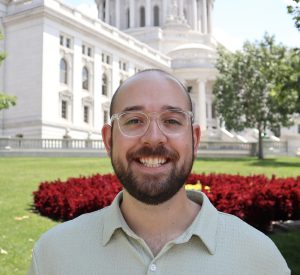
Dominic Ritacco is a graduate student in the Gaudet lab at Colum-bia University’s Department of Microbiology and Immunology. Dominic received his B.S. in Biochemistry from the University of Wisconsin-Madison. He has previously conducted infec-tious disease research in the Moormann lab at the University of Massachusetts Chan Medi-cal School and cell physiology research in the Cantor lab at the University of Wisconsin-Madison. Dominic is broadly interested in host-pathogen interactions and the effector mech-anisms underlying immunity.
In the Gaudet lab, Dominic studies how non-immune cells contribute to a holistic immune response through the induction of interferon-stimulated genes (ISGs). These ISGs are crucial for the defense against viral, bacterial, fungal, and protozoan pathogens. However, increas-ing evidence suggests that these ISGs are mobilized in a tissue- and cell type-specific manner. Dominic hopes to uncover whether this heterogeneity in interferon-induced effector expression could lead to increased pathogen susceptibility for specific tissues or cell types- a concept known as tropism.
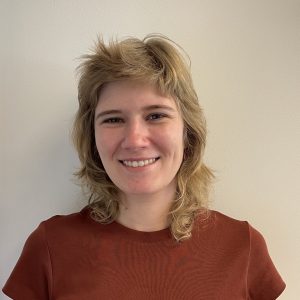
Valeriya Smaliy is a fourth-year graduate student in Dr. Susan Carpenter’s lab at University of California, Santa Cruz. She studies long non coding RNA GAPLINC’s mechanism in macrophages. GAPLINC has previously been characterized as a negative regulator of inflammation in both human and mouse models. In mice, overexpression worsens outcomes in endotoxic shock while knockouts, strikingly, survive the challenge. Her work using RNA Antisense Purification coupled with mass spectrometry identified the mitochondrial enzyme MCCC1 as a binding partner, suggesting that GAPLINC modulates macrophage inflammatory responses through interactions with mitochondrial metabolic machinery.
Dr. Mengze Lyu is an Instructor of Microbiology and Immunology in Medicine and an NIH/NCI K99 fellow at Weill Cornell Medicine. He earned his Ph.D. in Cell Biology at Peking University, where he identified manganese as a key regulator of antitumor immunity through activation of the cGAS-STING pathway in both mouse tumor models and clinical settings. Inspired to explore the complex interplay between host immunity and the gut microbiota, Dr. Lyu pursued postdoctoral training with Dr. Gregory F. Sonnenberg at Weill Cornell Medicine. His postdoctoral work has expanded his research scope to investigating host-microbiota interactions in the context of inflammation and cancer. Dr. Lyu has defined the heterogeneity and immunological functions of a new family of RORγt⁺ antigen-presenting cells, elucidating their roles in immune tolerance and inflammation. Dr. Lyu’s long-term goal is to establish an independent research laboratory focused on uncovering fundamental mechanisms of host-microbiota crosstalk in chronic inflammation and cancer, with the ultimate aim of developing novel preventative, therapeutic, and curative treatment strategies.