


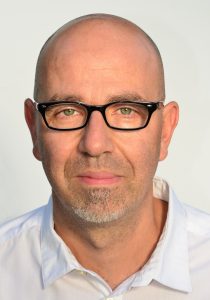

Prof. Dr. Burkhard Becher is a Professor and Chair of the Institute of Experimental Immunology at the University of Zurich, where he leads the Unit for Inflammation Research.
He earned his undergraduate degree in Biology at the University of Cologne in Germany, with a focus on Molecular Genetics and Biochemistry. For his doctoral training, he joined the lab of Jack Antel at the Montreal Neurological Institute of McGill University, Canada, where he investigated the role of microglial cells as brain-resident myeloid cells in autoimmune neuroinflammation. His graduate work helped shape our understanding of how self-reactive T cells are influenced within the central nervous system.
In 1999, Prof. Becher moved to Dartmouth Medical School in the United States to conduct postdoctoral work in the lab of Randy Noelle. There, he developed innovative in vivo tools to manipulate microglia during inflammation, furthering insights into CNS immunity and transgenic modeling.
He was recruited in 2003 as Assistant Professor at the University Hospital of Zurich (Switzerland) and, in 2008, was appointed full Professor and Chair of the Institute of Experimental Immunology. His research focuses on the cytokine-mediated communication networks that govern immune cell function in inflammation, with particular relevance to neuroinflammatory disorders and cancer immunotherapy.
Prof. Becher’s work has led to paradigm-shifting insights into the interplay between myeloid cells, lymphocytes, and cytokines such as GM-CSF, IL-12, and IL-23. His group employs high-dimensional immunoprofiling, in vivo disease models, and advanced transcriptomics to dissect the immune circuits driving pathology and repair.
He has been recognized with numerous scientific honors, including being named a Highly Cited Researcher (Clarivate Analytics) annually since 2018, and he is a recipient of the prestigious ERC Advanced Grant in 2019.
In addition to his research leadership, Prof. Becher is actively involved in scientific advisory boards and editorial boards of leading journals in immunology and neuroscience, and he continues to mentor a new generation of scientists in the field of experimental immunology and cytokine research.
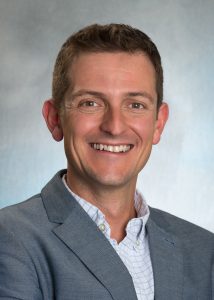
Francisco J. Quintana, PhD is a Professor of Neurology at the Ann Romney Center for Neurologic Diseases, at Brigham and Women’s Hospital, Harvard Medical School, the Director of the Program on Immunology of Aging at the Gene Lay Institute of Immunology and Inflammation, and an Associate Member at the Broad Institute of Harvard and MIT.
Dr. Quintana, a graduate of the University of Buenos Aires (1999, Argentina), obtained his PhD in immunology at the Weizmann Institute of Science (2004, Israel). He received postdoctoral training at the Weizmann Institute of Science and Harvard Medical School. In 2009, Dr. Quintana joined the faculty of Harvard Medical School.
Dr. Quintana’s research is focused on Neuroimmunology, investigating signaling pathways that control inflammation and neurodegeneration, with the ultimate goal of identifying novel therapeutic targets for immune-mediated and neurodegenerative disorders. Dr. Quintana has published over 260 peer reviewed articles and book chapters. Dr. Quintana’s work identified the transcription factor AHR as a regulator of adaptive and innate immune cells. He defined mechanisms by which cell-cell interactions, metabolism, the microbiome, and environmental chemicals control inflammation and neurodegeneration. Dr. Quintana’s work guided the development of Tapinarof, the first FDA-approved AHR-targeting drug for the treatment of psoriasis.
Dr. Quintana is the recipient of the Lady Anne Chain Prize for Academic Excellence and Scientific Achievements, the Junior Investigator Award from the National Multiple Sclerosis Society, the Pathway to Independence Award of the National Institute of Allergy and Infectious Diseases, the Award for Outstanding Research Achievement form Nature Biotechnology, the Tecan Award for Innovation, the Harry Weaver Award from the National Multiple Sclerosis Society, the Mentor Award from Harvard Medical School, the Milestones in Multiple Sclerosis Research Award from the National Multiple Sclerosis Society, the American Association of Immunologists-BD Biosciences Investigator Award, ISI Most Highly Cited List, the Barancik Prize of Innovation in Multiple Sclerosis Research, IGNITE BWH award and the Raices Prize for Excellence in Research (Argentina). In 2021, Dr. Quintana was named the Kuchroo Weiner Distinguished Professor of Neuroimmunology, and in 2025, he was inducted into the National Academy of Inventors.
The Award Presentations will take place during the Opening Session of the Cytokines 2025 Annual Meeting on Sunday, Nov. 2, 2025 at the Seattle Westin in Seattle, Washington, U.S. Click here for more information.